
Self-Learning LED Traffic Light Countdown Timer
A self-learning traffic countdown observes signal cycles to derive a duration for its display. The key decision is whether the controller’s behaviour is sufficiently predictable for the chosen timer—not simply whether the display fits beside the signal head.
What happens during learning
At startup or after a programme change, the display may remain blank while the unit observes and checks signal durations. The exact number of cycles and the display behaviour depend on the model and configuration.
A blank display during learning is different from a confirmed fault. Use the model instructions to distinguish normal learning from an input, wiring or compatibility problem.
When the timing changes
An actuated or adaptive controller may change durations in response to demand. Previous cycles may not provide a reliable remaining time. Confirm how the timer handles extensions, shortened phases and pedestrian calls.
If the remaining time cannot be established, the system needs the defined display behaviour for that condition. Do not assume every self-learning unit suits every controller.

Display and power options
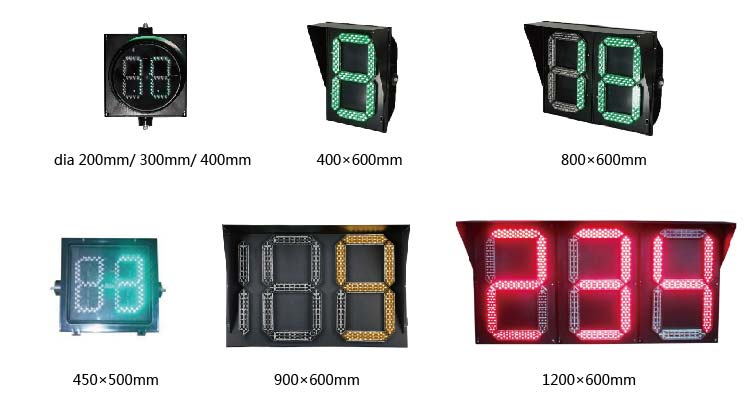
Confirm digit format, colours, mounting dimensions and viewing conditions for the selected version. AC and DC supplies described in a catalogue refer to distinct versions unless the model documentation states otherwise.
Read the rating label and wiring diagram before connection. Self-learning does not mean that mounting, wiring and compatibility checks can be skipped.
Acceptance checks to request
Ask for a demonstration with the intended controller programme: startup, stable cycles, programme changes and abnormal inputs. Record the approved combination of controller and timer. This article explains self-learning; the linked selection guide compares it with trigger and communication types.