
Solution For Traffic Management In Workplaces
Workplace traffic planning should address the interaction between pedestrians, vehicles and moving equipment. Portable traffic signals can form part of the arrangement, especially where traffic must alternate through a shared section, but they do not replace route separation and site procedures.
Start with the movement conflicts
Map entrances, loading areas, pedestrian crossings and restricted-width sections. Decide which movements need separation, which require controlled access and where drivers can wait without blocking other routes.
A paired portable signal arrangement may suit an alternating section. A loading bay or pedestrian crossing may require a different layout. Select equipment after defining the movement, not before.
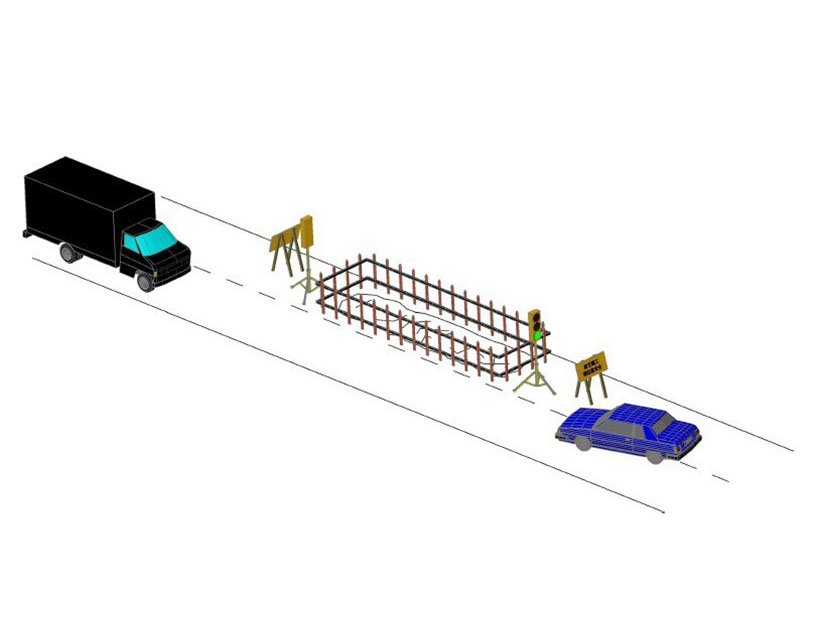
Confirm the portable signal configuration
The illustrated arrangement uses two mobile units with signal heads and battery power, with solar charging where specified. Radio coordination, remote setup, stabilisers and powered masts must be confirmed for the offered version.
A catalogue line-of-sight radio range is not the tested range at a site with buildings or machinery. Likewise, a maintenance-free battery description does not remove inspection, charging or replacement needs.
Set operating conditions for the site
The sequence must account for the controlled section, vehicle movements and clearance requirements. Manual, scheduled or flashing modes should only be used where appropriate to the approved traffic plan.
Define the response to radio loss, low power and a vehicle remaining in the shared area. Confirm responsibilities for setup, supervision and recovery.
Inspect, test and hand over
Check stability, visibility, communications and the required battery reserve before opening the route. Document settings, acceptance checks and maintenance responsibilities. Any claimed improvements should be measured against the site’s actual operation.