How to Install Tunnel Traffic Signals (Red cross Green Arrow Signals)
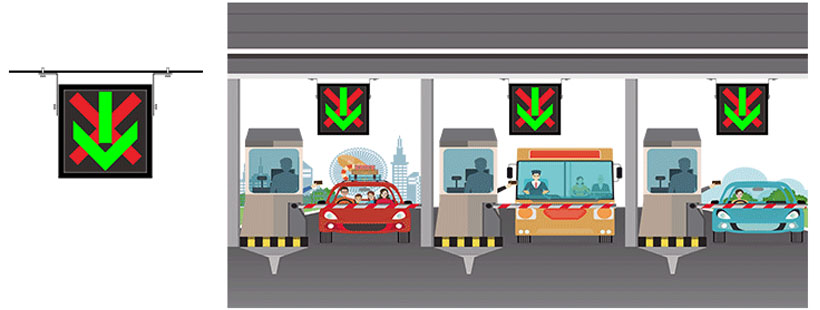
Red-cross and green-arrow lane indicators are used in tunnels, toll facilities and other lane-management applications. Selection starts with the required visibility, mounting arrangement and control interface. Their use and meaning must follow the rules for the destination site.
Visible indication
Choose the symbol and viewing conditions for the lane.
Secure mounting
Confirm the support, clearances and maintenance access.
Compatible control
Match the power supply and command interface to the exact model.
Choose the display for the approach
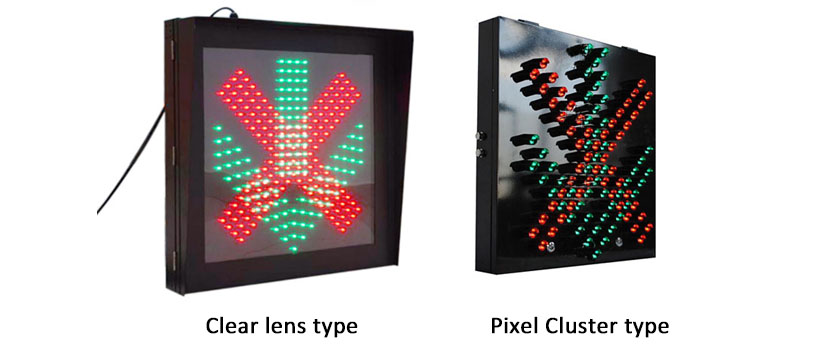
Lens-based and LED-matrix versions are described in the product range. Compare viewing distance, angle, available mounting space and the required symbol. Confirm dimensions, supply voltage and environmental ratings in the datasheet for the proposed model.
A published example of LED wavelength, enclosure size or protective coating should not be treated as a specification for every version. Request the documentation that matches the equipment offered.
Plan mounting and maintenance access
Wall or L-bracket mounting and suspended arrangements require different supports. Use the model-specific drawing and the structural design for the site. Confirm orientation, clearance, cable routing and access for maintenance.
Do not transfer example bolt sizes or tightening values between models. The mounting assembly must suit the support structure and design loads.
Confirm the electrical and control interfaces
Identify the exact power supply and terminal functions from the equipment label and wiring diagram. Wire colour alone does not identify the correct connection. Electrical work must be performed with the supply isolated by qualified personnel.
Confirm how the lane-management controller commands each indication and how loss of power, communication or control is handled. Do not infer controller compatibility from a matching enclosure or connector.
Test the complete lane-control sequence
Check each indication and its visibility, then test coordination with the other lane-control equipment. Record normal states, transitions and the agreed responses to faults. Keep the drawings, settings and acceptance results with the handover documentation.